
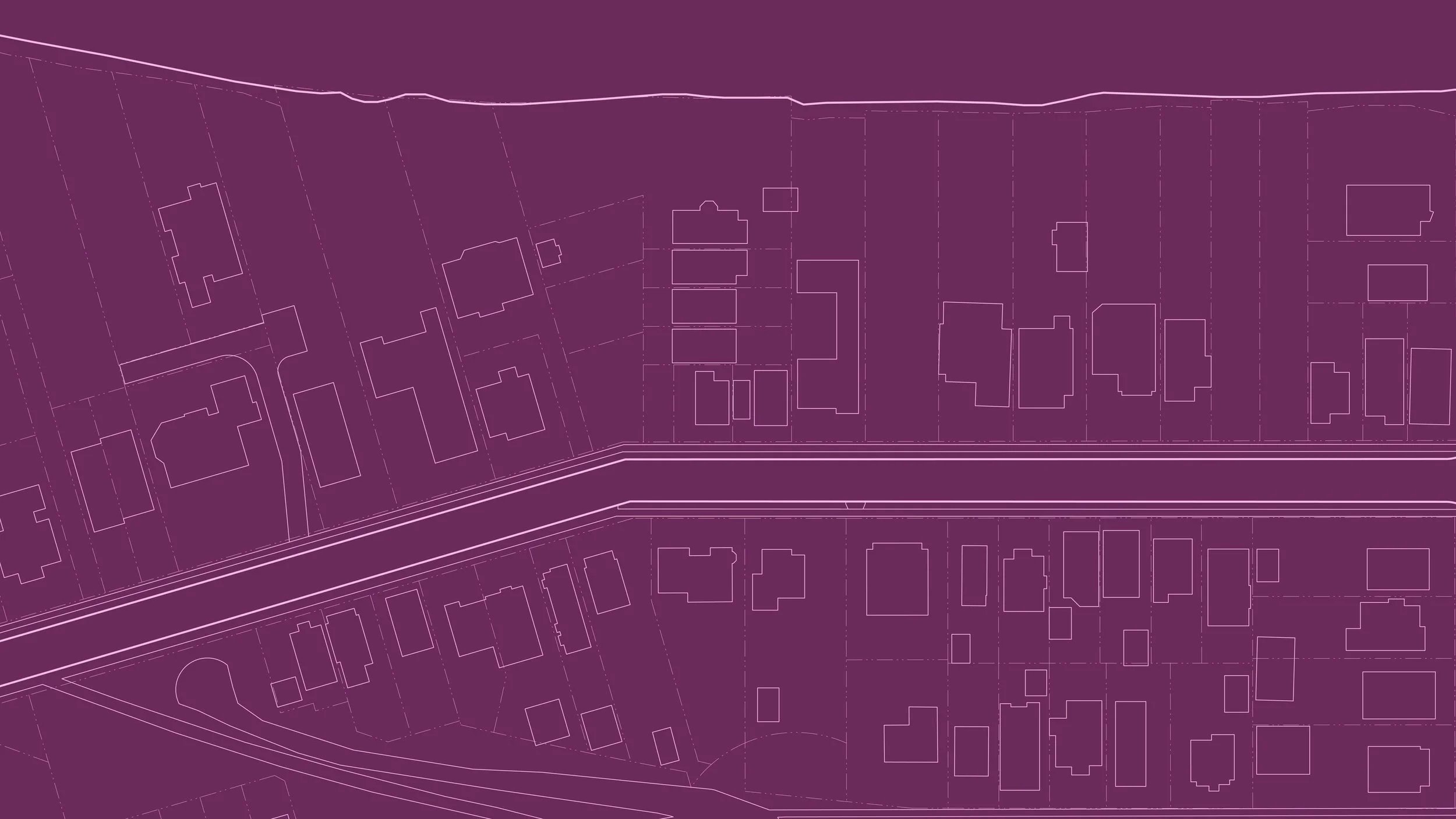
NEW MONICA MULTIFAMILY
LOCATION: Calgary, AB, Canada
YEAR: 2026
STATUS: City Approvals
Project in collaboration with XYC Design
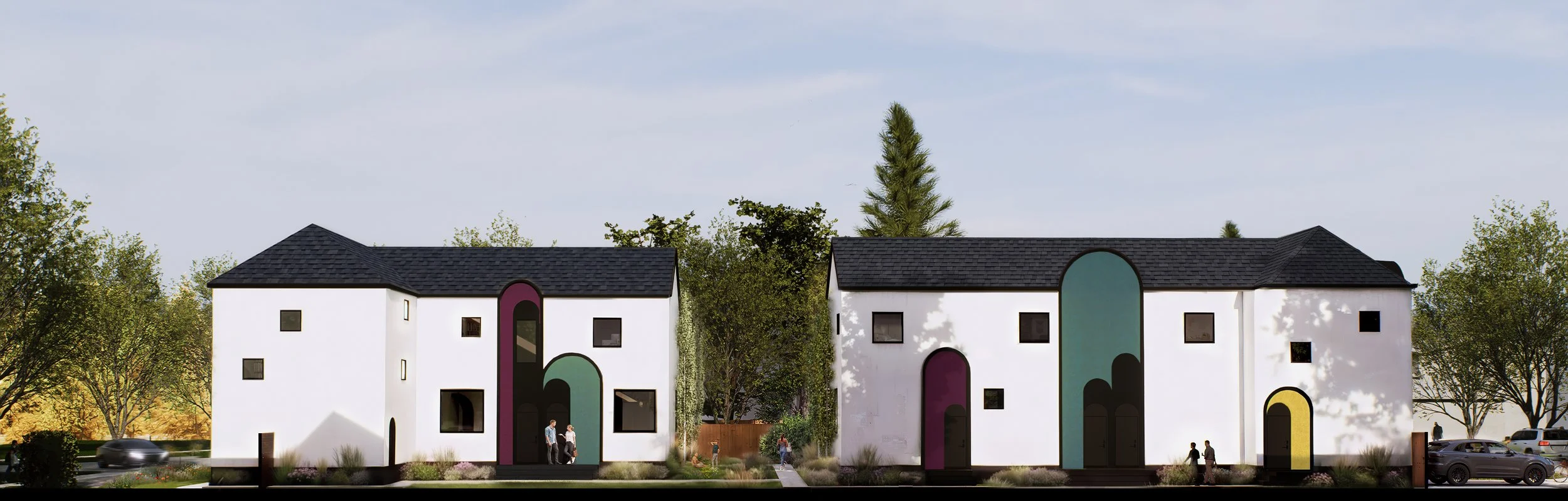
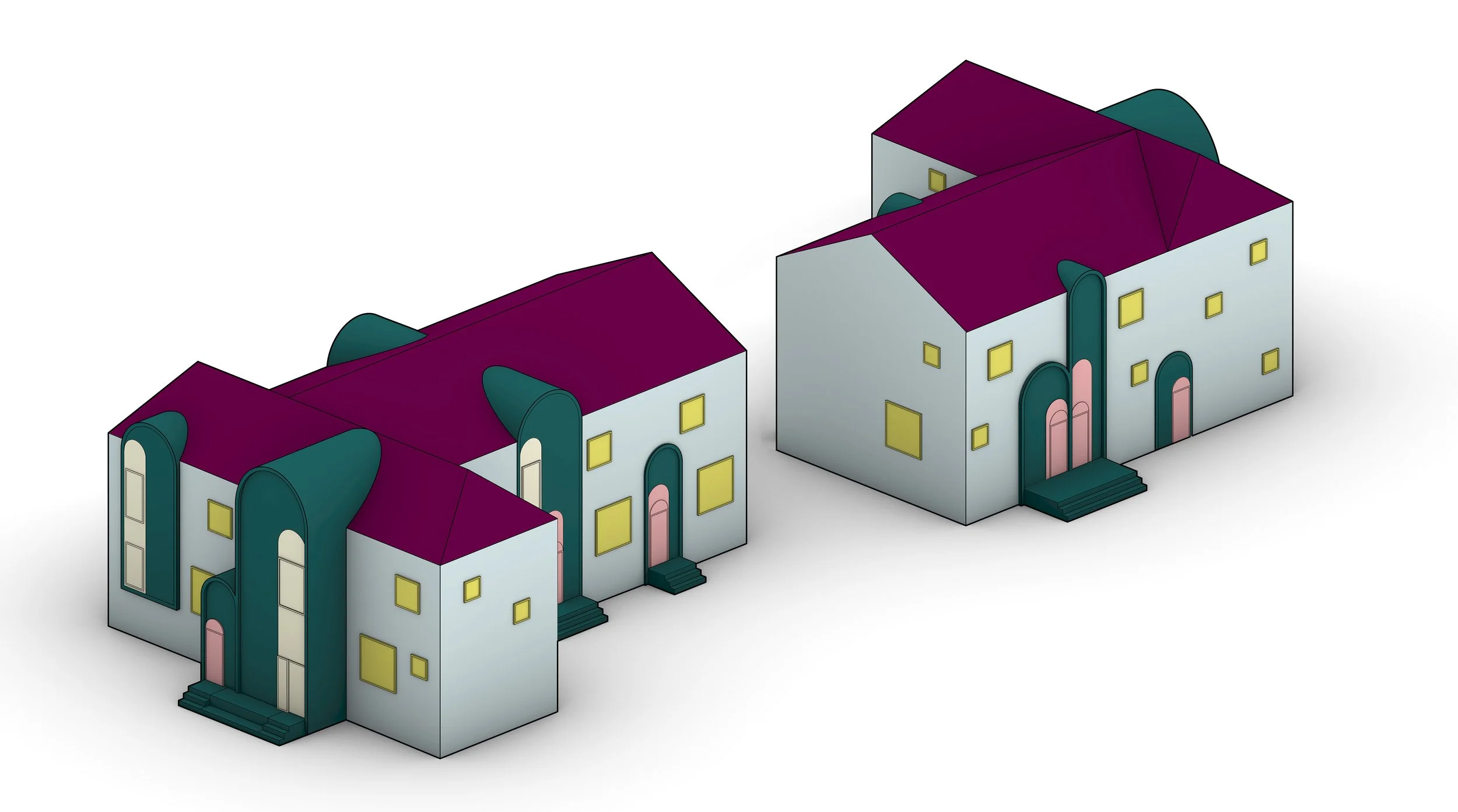
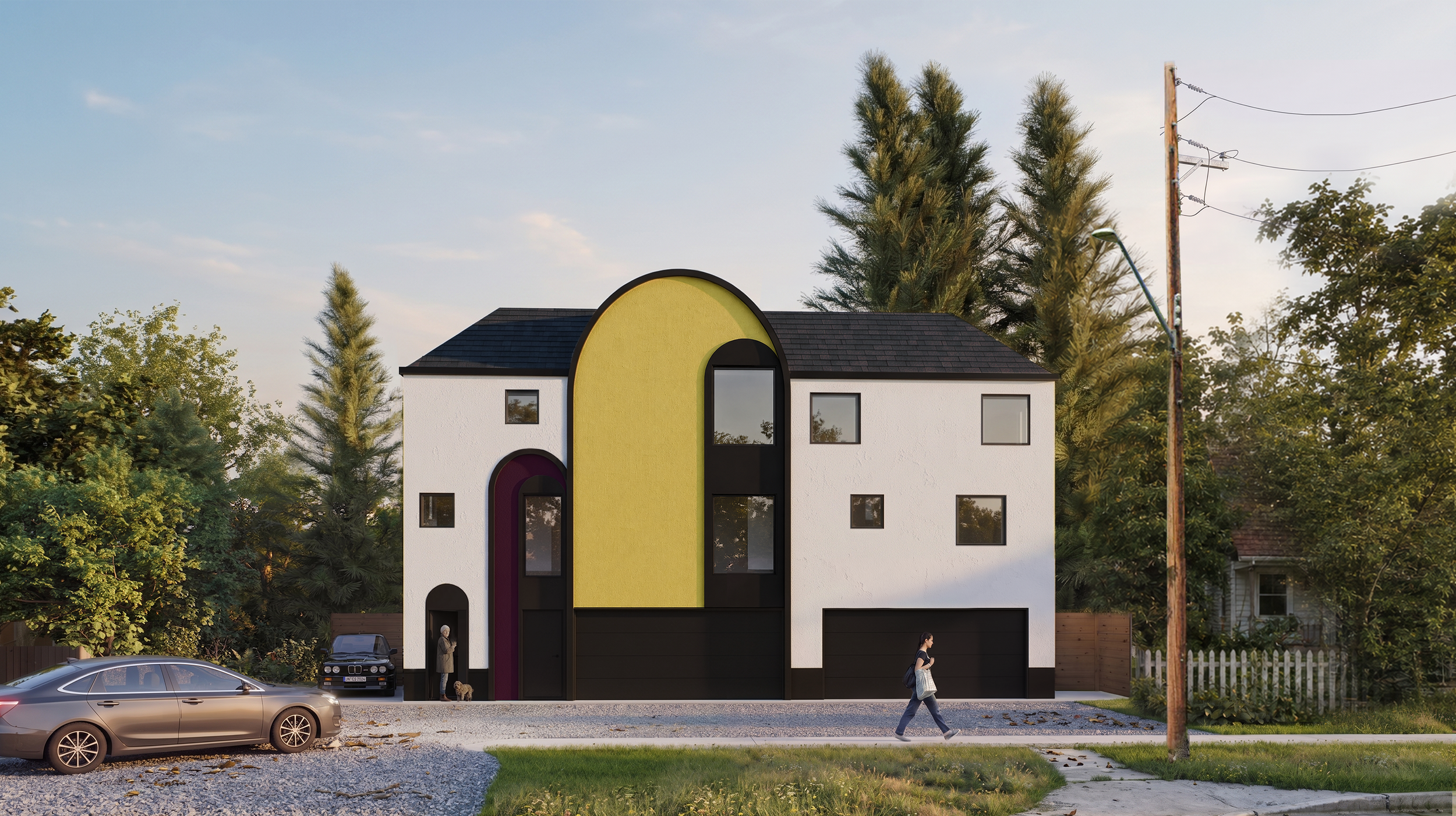
As both the architect and developer of this 16-unit purpose-built rental, we use design as a tool for agency, balancing affordability, quality, and fit. The project is composed of sixteen carefully arranged dwellings across two modest buildings: seven one-storey garden-level homes, seven two-storey stacked towns above them, and two additional two-storey units above the garage. All homes either face New Street or St. Monica Avenue, or turn inward toward a shared courtyard—ensuring no unit is relegated to the “back.” By lifting the main floor of the stacked towns approximately 1.4 metres above grade, the design meets flood mitigation requirements while allowing the lower homes to rise half a storey into daylight. Each home is a through-unit, oriented to maximize natural light and cross-ventilation, with each unit having their own front porch—reinforcing a clear sense of ownership.
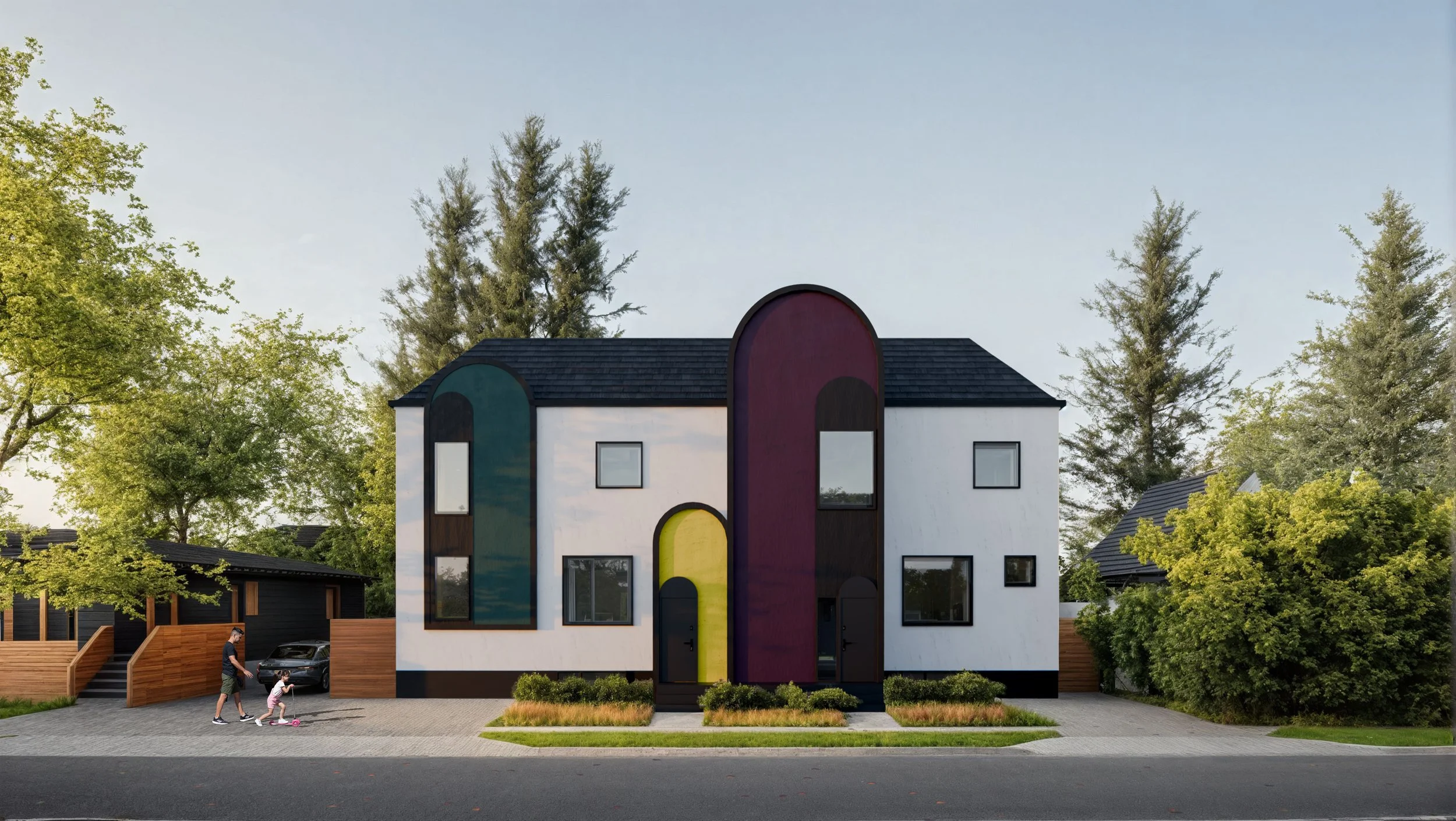
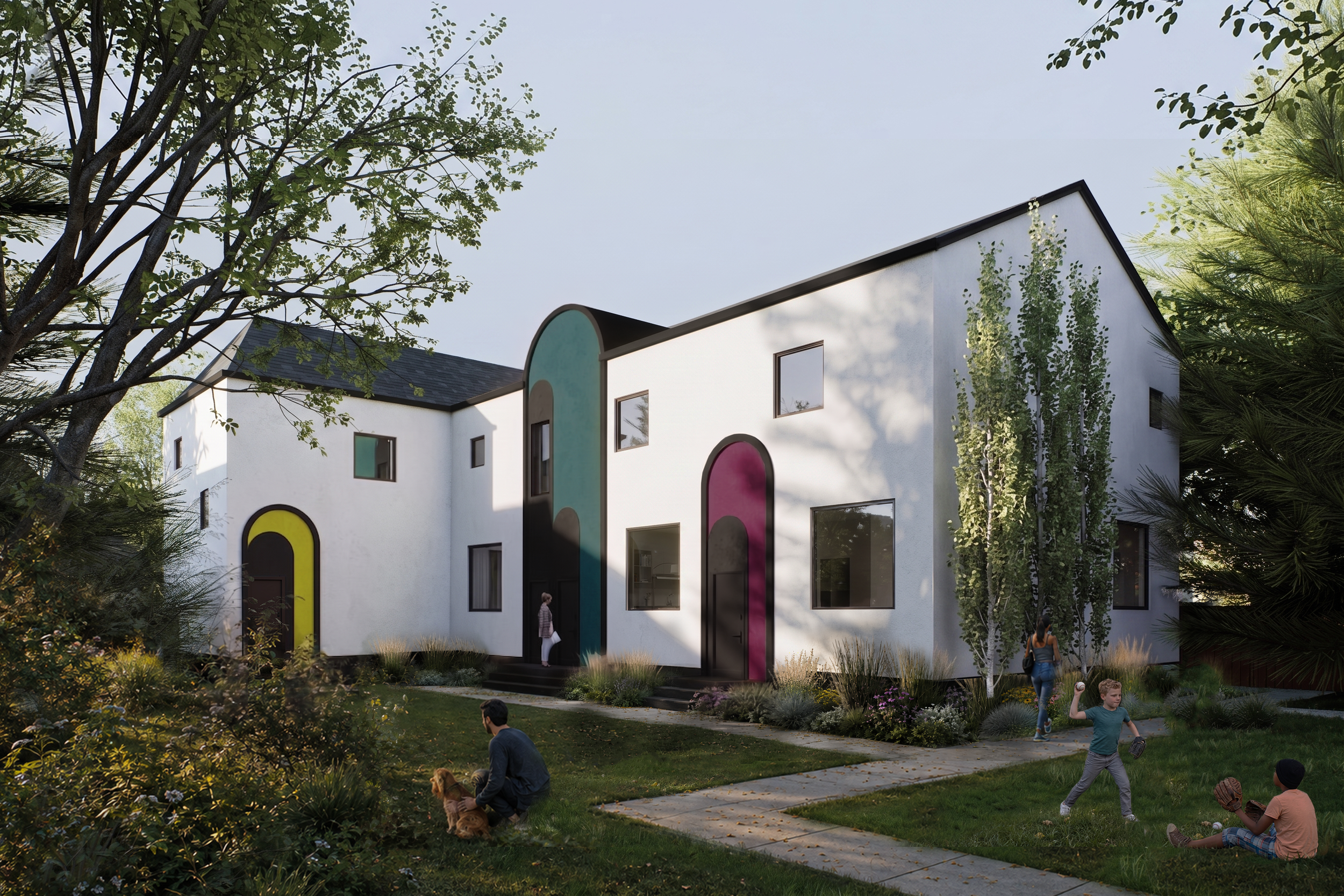
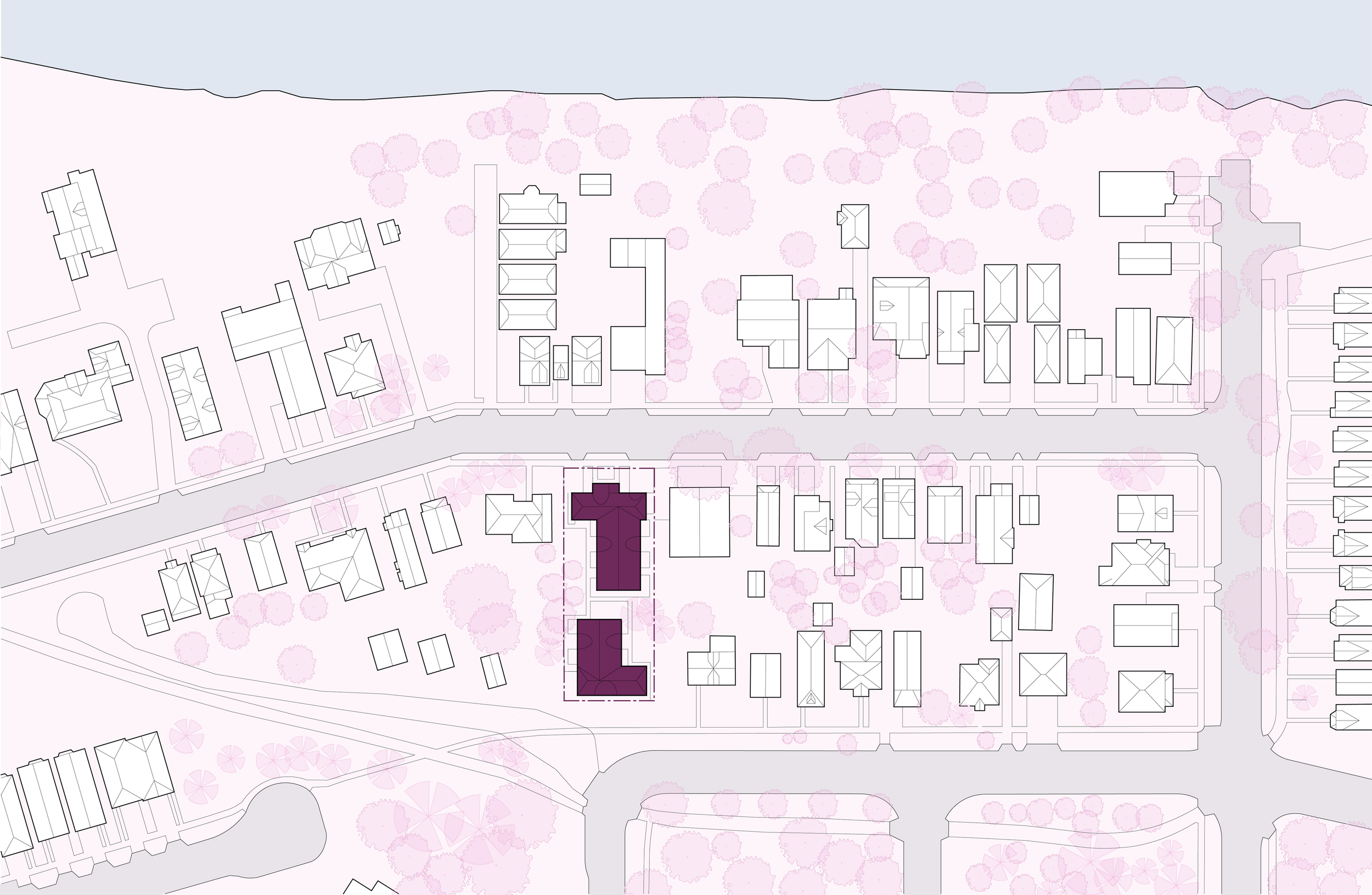
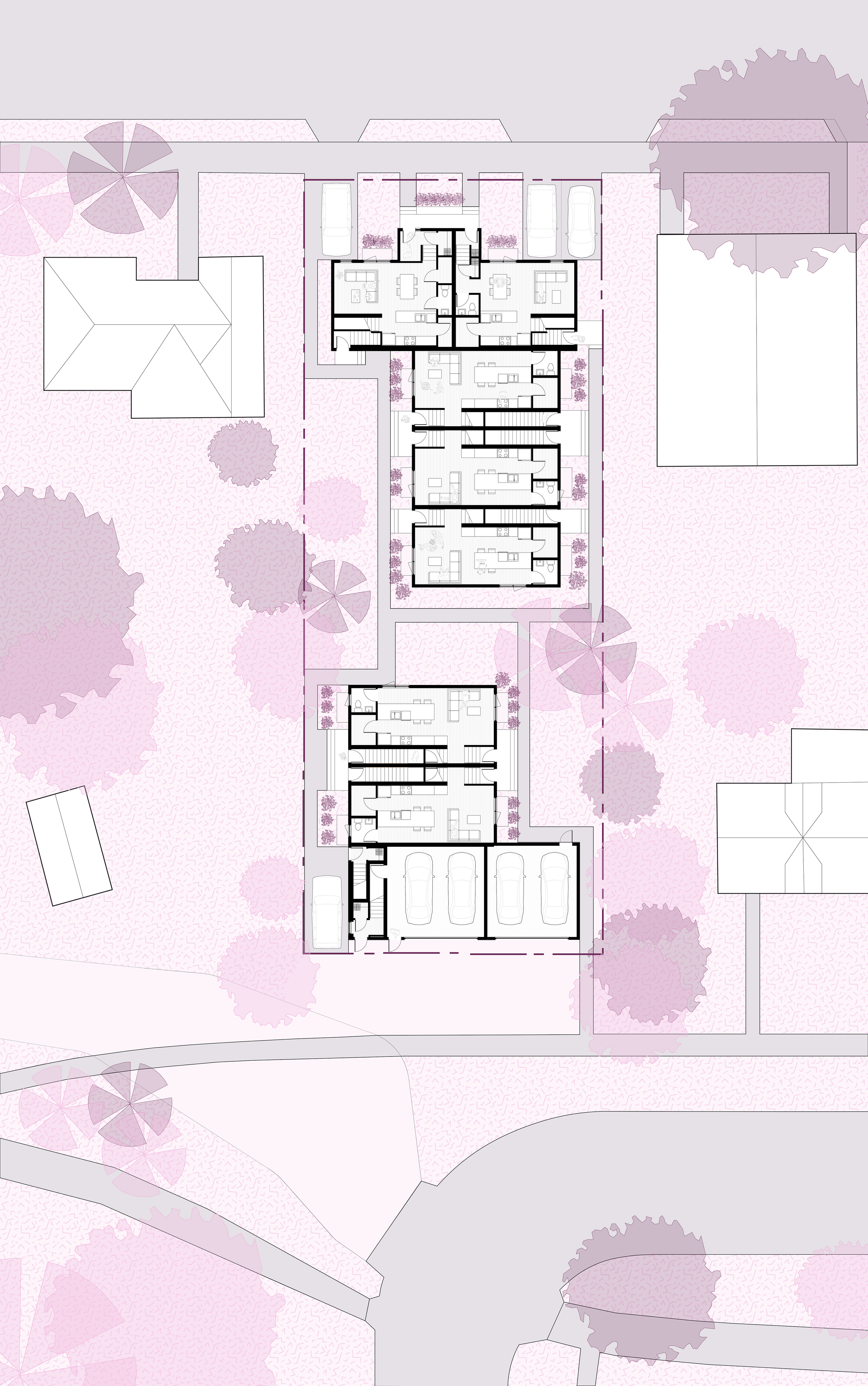
Enabled by H-GO land use, New Monica leverages the flexibility to achieve R-CG-level density without maxing out height, lot coverage, or FAR. That freedom allowed us to work with the site rather than against it by preserving mature trees, carving out two generous courtyards, widening side setbacks for light and privacy, and introducing over-garage homes that activate St. Monica Avenue.
Funded through CMHC’s MLI Select program, the project exceeds affordability benchmarks, with over 40% of the homes offered at below-market rates. We’re testing how small, mixed-market projects can add thoughtful density—proving that good design creates better housing outcomes when driven by purpose, not just profit. We believe high quality housing choices belong in established communities like Inglewood, where transit, commuting paths, and amenities are closeby, and where thoughtful architecture can quietly strengthen the fabric of the city.
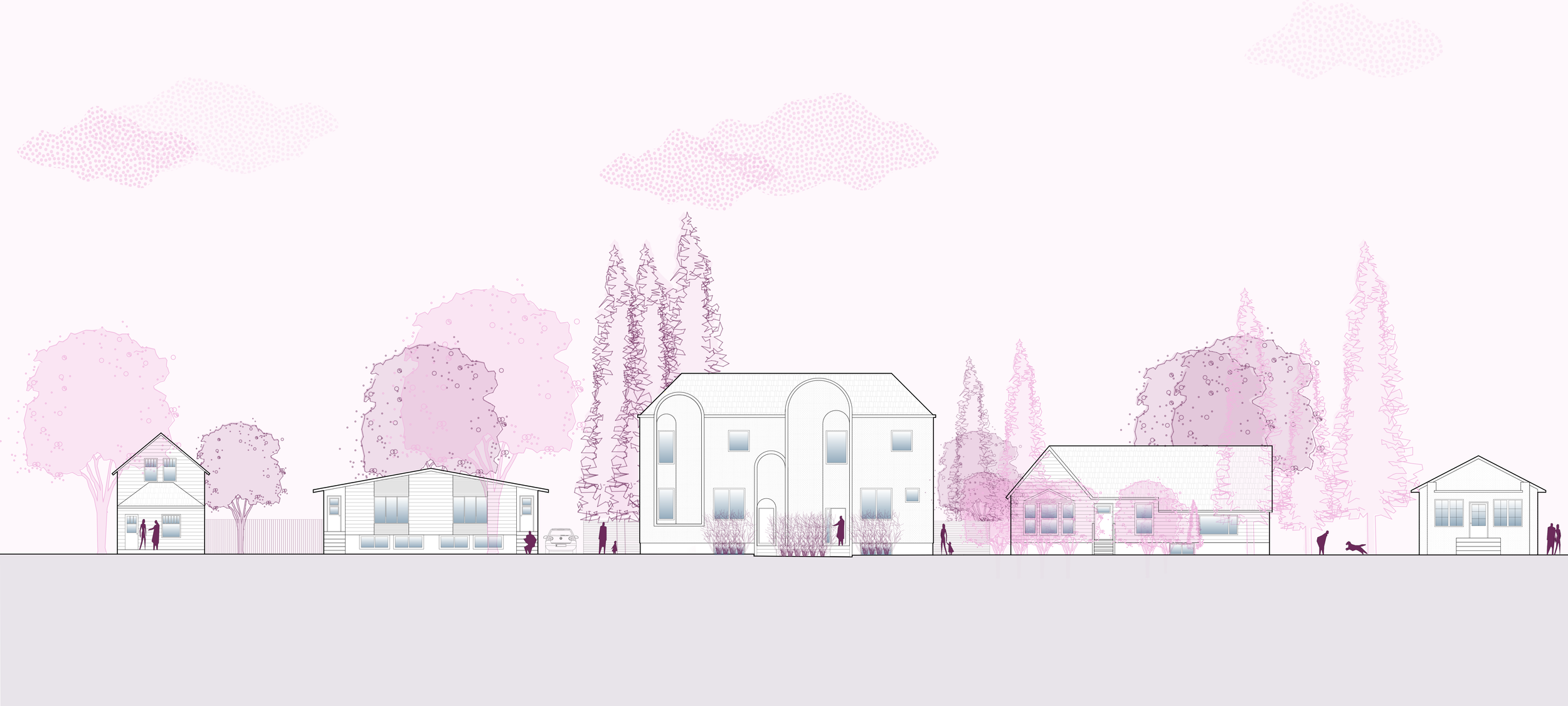
The architecture expression of our project is informed directly by its context, which is essential on a street protective of its identity. By guiding change rather than resisting it, we believe communities can evolve from within their own language. Using our Architecture Soup design tool, we translated the observed architectural patterns of the street into a visual interactive toolkit—informing our new development to grow from the neighbourhood’s existing language, and proving that density, affordability, and character can coexist quietly and confidently. We're showing that neighbourhoods can evolve in ways that respect their context while expanding housing options.
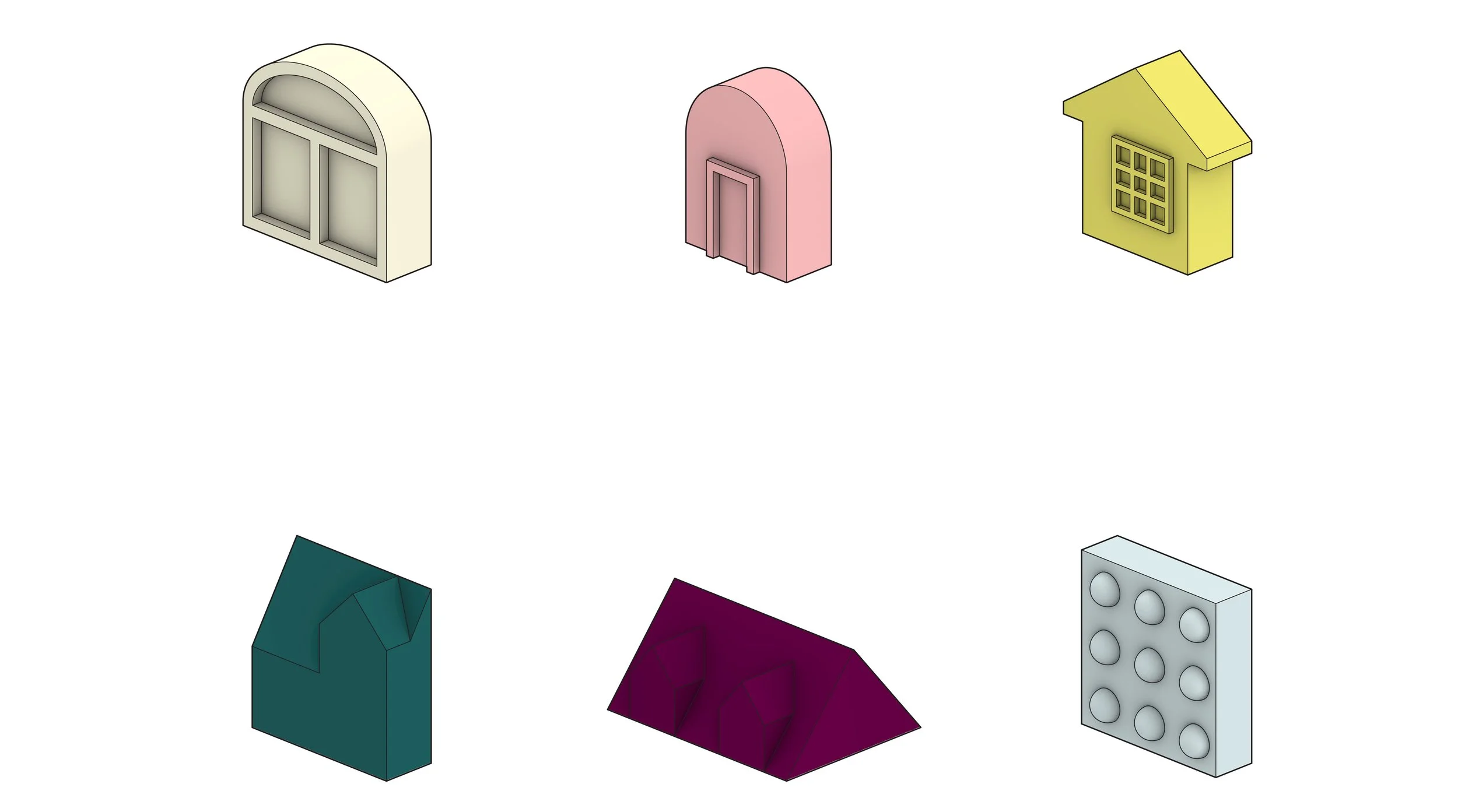
CHARACTER STAPLES
CHARACTER ANOMALIES

ALL HOUSING COMMERCIAL STUDIES